The American Home Preparedness Guide: 6 Things Every Family Needs Before the Next Blackout

For most Americans, a power outage is a minor inconvenience. The lights go out, you grab a flashlight, and everything's back in an hour.
But that's not the kind of outage that's on the rise. In the last 20 years, major power outages in the U.S. have doubled. Hurricanes, wildfires, ice storms, and cyberattacks on the grid are leaving families in the dark for days, not hours.
And when the power stays off, things go from uncomfortable to dangerous fast.
The good news is that a little preparation goes a long way. These six steps will put your family ahead of 90% of households when the next blackout hits.
1. Get a backup power source you can use inside your home.
This is the most important thing on the list, and the one most families skip.
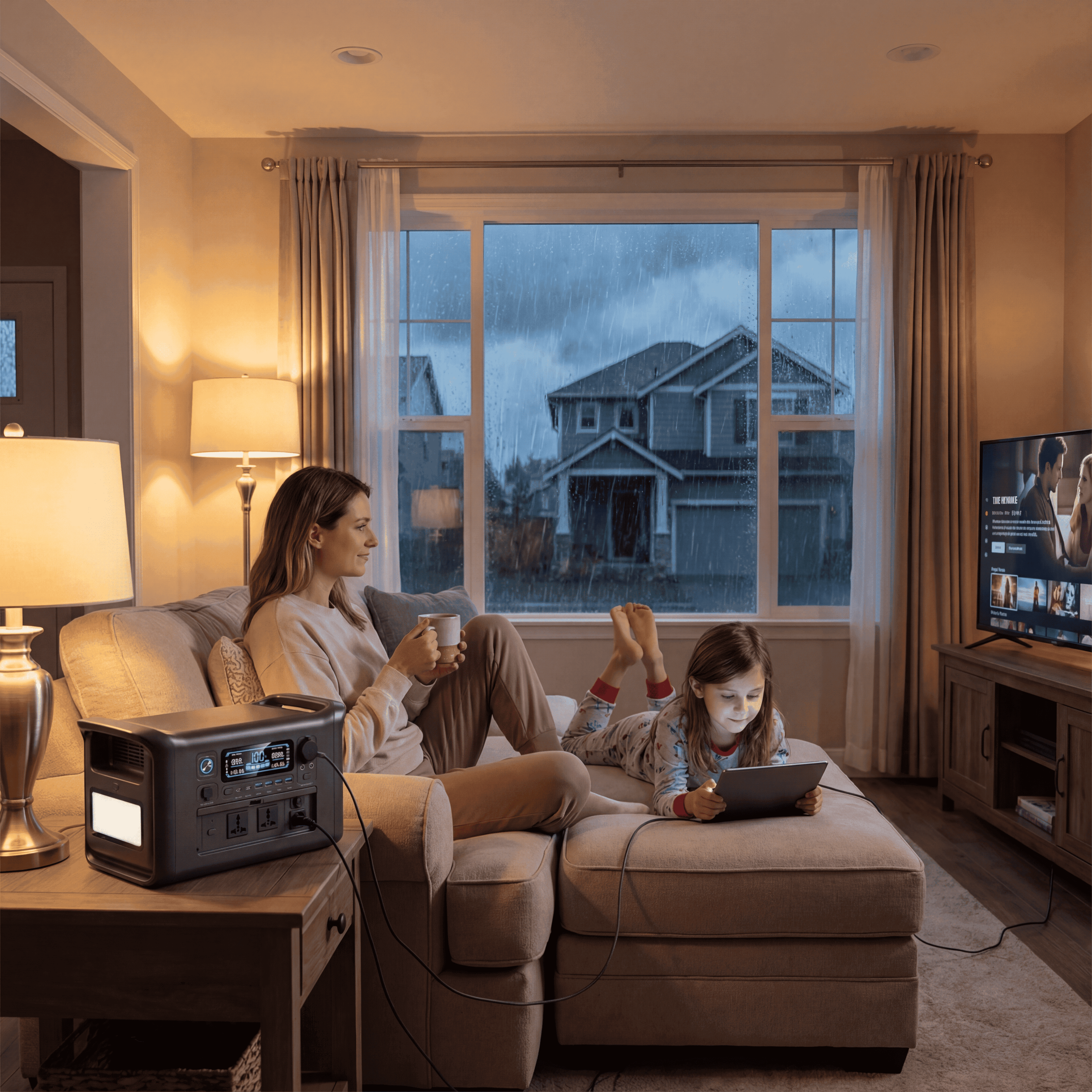
We recommend the ReadyHaven 10-in-1 Emergency Power System.
It delivers 1,600W of continuous power, comes with a free 200W solar panel, and arrives fully charged and ready to use.
Gas generators are what most people think of first, but they produce carbon monoxide, can never be used indoors, and kill more than 85 Americans every year.
The ReadyHaven runs silent, produces zero fumes, and sits on your kitchen counter next to the fridge it's keeping cold.
Or keeping critical medical devices on like CPAPs or insulin pumps.
No fuel. No maintenance. No risk to your family.
2. Build a 72-hour emergency food and water supply.
FEMA recommends every household have at least 72 hours of food and water stored and ready to go.
That means one gallon of water per person per day for drinking and sanitation, plus enough non-perishable food to keep everyone fed without cooking.
Most families have enough food in their pantry to last a few days, but they forget about water. And they forget that most of their food requires electricity to cook or refrigerate.
Stock the basics and keep it simple. Canned goods, peanut butter, crackers, dried fruit, protein bars, and a manual can opener. For water, fill clean jugs and store them somewhere cool. Replace them every six months.
If you have infants, pets, or anyone on a special diet, plan for their needs specifically. The last place you want to be during a blackout is at a sold-out grocery store with a crying baby.
3. Know how to keep your fridge safe during blackout.
This is the thing that stresses people out the most during a power outage, and for good reason. A fridge full of groceries can represent hundreds of dollars, and more importantly, spoiled food can make your family sick.
The CDC says a closed refrigerator will keep food safe for about 4 hours without power. A full freezer holds its temperature for about 48 hours. A half-full freezer, 24 hours. But that clock starts ticking the moment the grid goes down.
Here's how to stretch it:
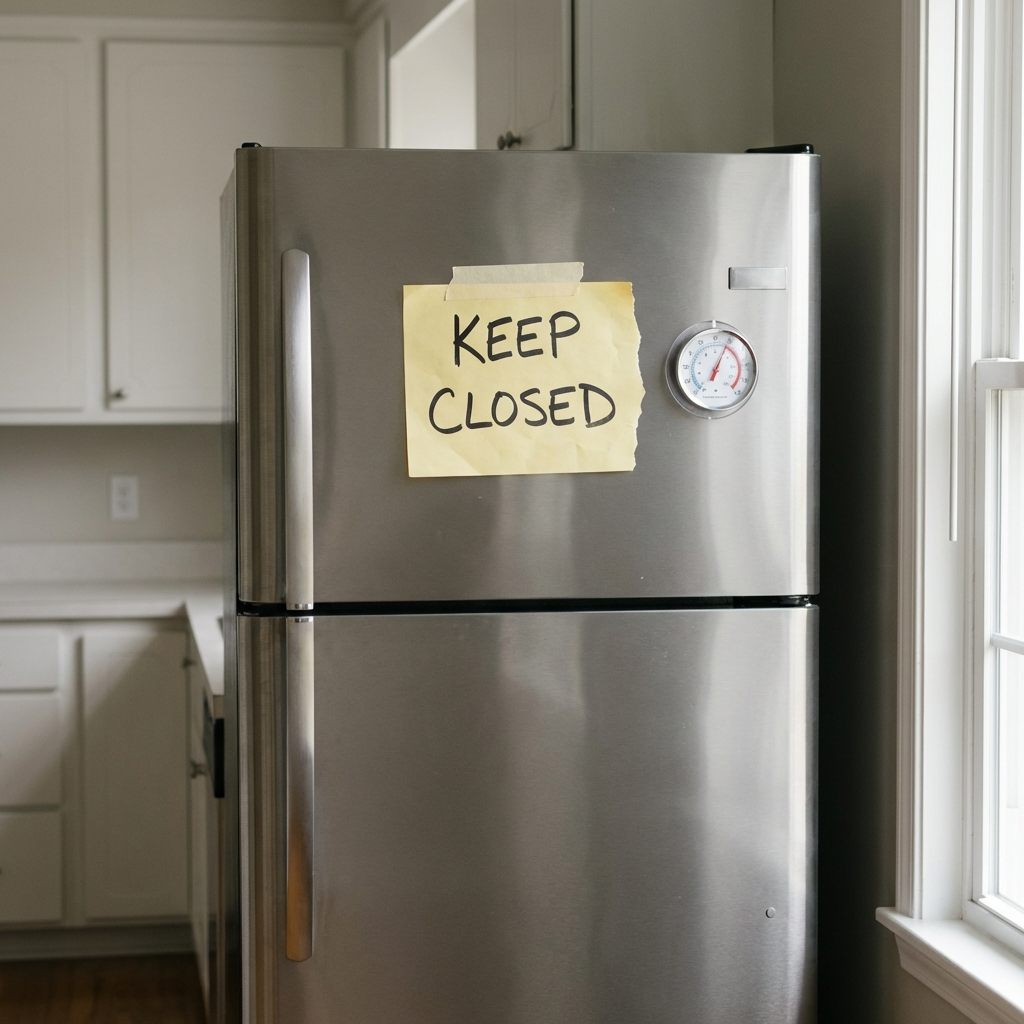
Keep the doors closed. Every time you open the fridge, you lose cold air you can't get back. Resist the urge to check on things. If you don't know what you need, don't open it.
Fill empty space with water bottles. A full fridge holds cold better than a half-empty one. Frozen water bottles in the freezer act as ice packs and buy you extra time.
If you have a backup power source, cycle your fridge. You don't need to run it continuously. Plug it in for a couple of hours to bring the temperature down, unplug it, and let the cold air hold. A good portable generator can keep your fridge cycling for well over 24 hours on a single charge.
Use a thermometer. If the fridge stays at or below 40°F, your food is safe. Above that, you're on the clock.
4. Have a plan for medical devices.
If anyone in your household uses a CPAP machine, insulin pump, oxygen concentrator, nebulizer, or any other powered medical device, a blackout isn't just an inconvenience. It's a health emergency.
Talk to your doctor about your device's power requirements. Know the wattage. Know how many hours you need it to run. Write it down and keep it with your emergency supplies.
For CPAP users specifically, most machines draw around 30 to 50 watts. A quality portable power station can run a CPAP for 20 or more hours on a single charge, which is enough to get through multiple nights without grid power.
The key feature to look for is an Uninterruptible Power Supply, sometimes listed as UPS. This means the power station sits between the wall outlet and your device. It charges from the wall while passing power through. The moment the electricity drops, it switches to battery instantly, without any gap. Your CPAP never stops. You never wake up gasping. Your family member on oxygen never loses airflow.
The ReadyHaven RH1000 includes this feature built in. Plug it in at your bedside, connect your CPAP, and forget about it until you need it. The switchover happens in under 10 milliseconds.
If you or a loved one depends on a powered medical device, this is not optional. Have a backup plan in place before the storm, not during it.
5. Create a family communication plan when cell towers do down.
When the power goes out, cell towers often follow. They run on backup batteries that typically last 4 to 8 hours. After that, you could be without cell service entirely.
Decide on a meeting point. If your family is separated when a disaster hits and phones aren't working, everyone should know where to go. Pick a place close to home and a second one outside your neighborhood in case the area isn't safe.
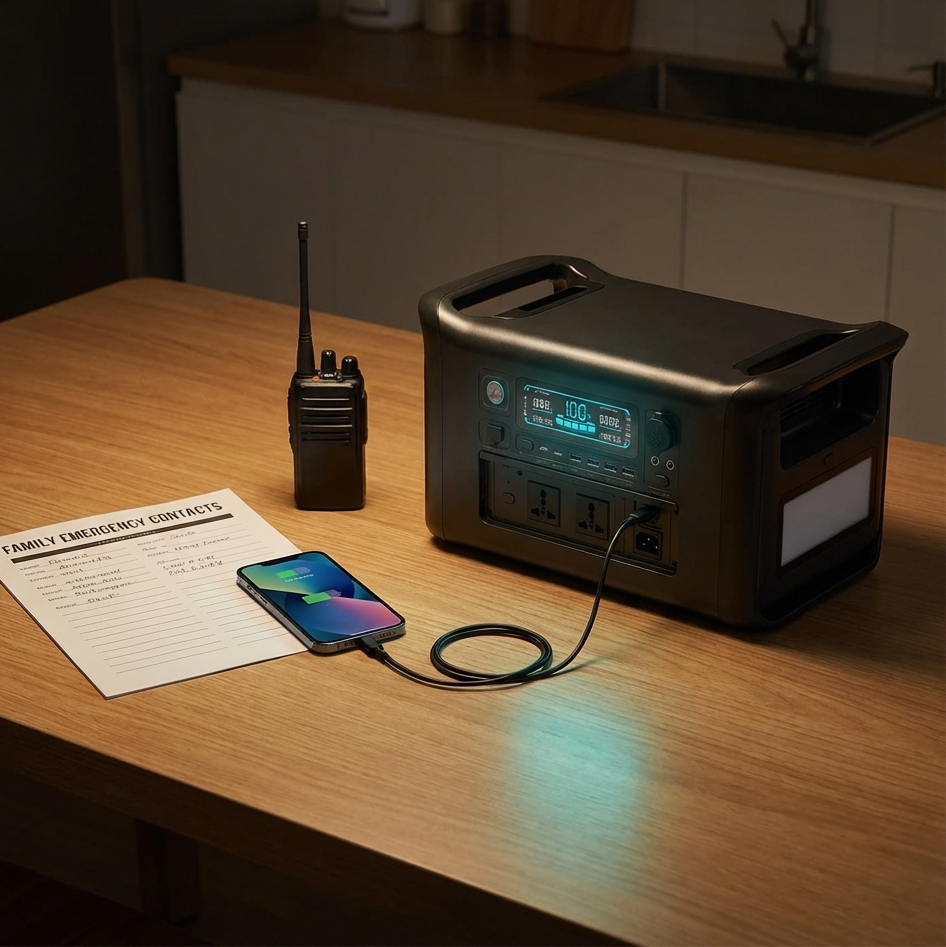
Keep a printed list of emergency contacts. You probably don't have your spouse's number memorized, let alone your parents' or your kids' school. Print it out. Laminate it. Put one in the kitchen, one in each car, and one in your go bag.
Consider a pair of two-way radios. They don't rely on cell towers, they're cheap, and they work when nothing else does. Keep them charged and stored with your emergency kit.
And keep your phones charged. This sounds obvious, but it's the thing that fails first. A power station with USB ports can charge every phone in the house dozens of times over. Having charged phones when the towers come back online could be the difference between reaching your family and waiting in the dark.
6. Keep a blackout kit in one place and ready to grab.
When the power goes out, you don't want to be stumbling through a dark house looking for flashlights in a junk drawer. Everything you need should be in one place, and everyone in the household should know where it is.
Your blackout kit should include:
A flashlight with extra batteries. A battery-powered or hand-crank radio. A basic first aid kit. Your printed emergency contact list. A manual can opener. Extra phone charging cables. A few bottles of water. Any critical medications with at least a 3-day supply.
Keep it somewhere easy to access in the dark. A hall closet, a shelf by the back door, or the top of the basement stairs. Not buried in the garage behind the holiday decorations.
Label it. Tell your family where it is. Check it twice a year when you change your smoke detector batteries. That's it.
With a few simple steps, your family can go from unprepared to ready in a single weekend. You don't need to build a bunker or stockpile for the apocalypse. You just need a plan, a few supplies, and a reliable way to keep the power on when the grid goes dark.
The families who are ready don't panic. They just flip the switch.

© Copyright. All rights reserved.